



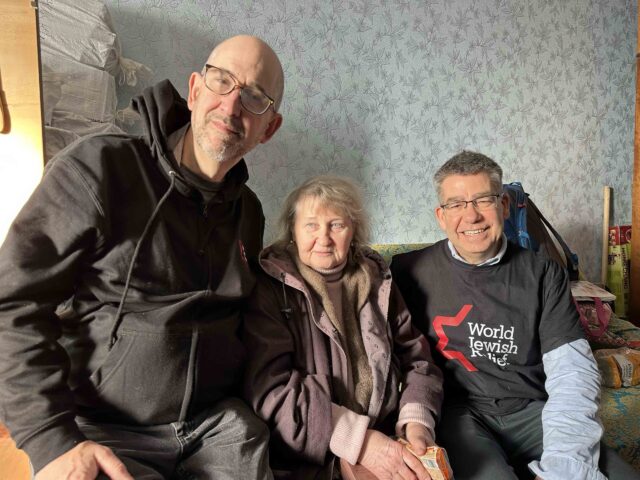
In early February, members of the World Jewish Relief team – including Executive Director of World Jewish Relief, David Weisberg – visited Ukraine as part of our ongoing commitment to support people living through nearly four years of war.
Traveling to Kyiv in the depths of winter offered a stark view into daily life under prolonged conflict – and into the urgent, evolving needs that, with the support of our community, we are working to address in partnership with local organizations.
Winter in Ukraine is harsh even in ordinary times. During this visit, temperatures fell well below zero. Electricity was rationed to just a few hours a day due to repeated attacks on the country’s power infrastructure. After nightfall, the city grew dark not simply because the sun had set, but because streetlights were off and power was being conserved to prevent total grid failure. For Ukrainians, and especially for older adults and people with disabilities, these conditions are not merely uncomfortable; they are dangerous.
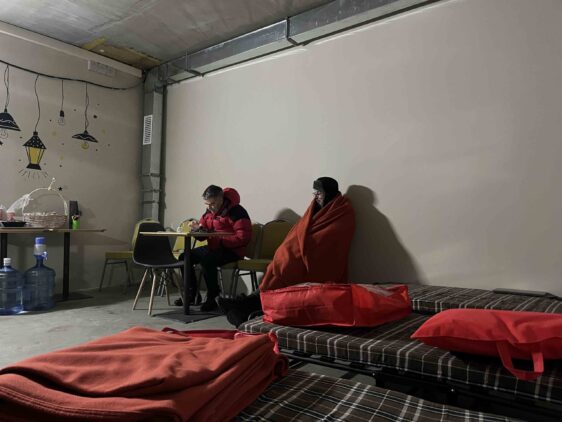
World Jewish Relief team in an Air Raid Shelter
The physical cold is made worse by constant uncertainty and anxiety. Air alerts can sound at any hour, sometimes multiple times a day, warning of incoming drones or missiles. During the visit, members of the World Jewish Relief team were forced into an air raid shelter for seven hours one night during the worst attack of the New Year.
Even with advance notice, many people are forced to make impossible choices between what safety requires, and what they are able or willing to do. Over time, the psychological toll of this constant vigilance becomes relentless.
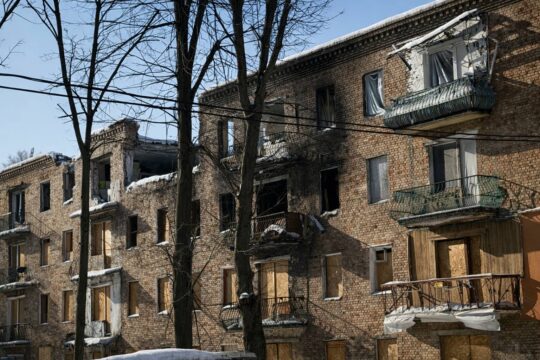
During the visit, World Jewish Relief met individuals and families whose homes had been damaged by aerial attacks. Windows blown out by nearby explosions left apartments exposed to freezing temperatures, unreliable heat, and, at times, no running water. Temporary fixes – plastic sheeting or plywood – offer little protection during a Ukrainian winter.
Delivering Life-Sustaining Support With Donors and Partners
With the support of donors and partners, World Jewish Relief is responding through practical, life-sustaining interventions. Working alongside trusted local organizations such as 2U, we are repairing war-damaged homes by replacing windows and reinforcing structures – restoring not only warmth, but dignity and a sense of safety. These repairs restore the basic conditions that make a home liveable – safety, warmth, and dignity.
Our work in Ukraine extends beyond home repairs and reaches people of all backgrounds. World Jewish Relief supports both Jewish and non-Jewish communities, responding wherever needs are greatest. In areas closer to the front lines, we partner with organizations such as Blagorob, who have stepped forward to deliver life-saving essentials to civilians living under constant threat. These efforts ensure that people who cannot leave – and those who choose to remain – are not cut off from basic necessities.
We also work with local professionals providing trauma-informed mental health support. Psychologists, social workers, and caregivers, some carrying their own injuries from the war, are helping others cope with anxiety, loss, and prolonged stress.
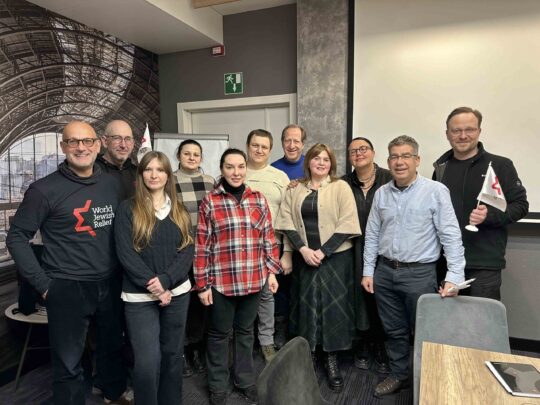
In addition, World Jewish Relief provides winter emergency support such as warm clothing and power banks, homecare and social connection for older adults and people with disabilities, and livelihood assistance to help individuals adapt or rebuild ways to support themselves and their families.
Again and again, what emerges alongside hardship is resilience. Neighbors share food with those who have even less. Community members transform personal loss into collective care. Many remain because Ukraine is home, and because they are committed to caring for one another.
For more than 90 years, World Jewish Relief has responded to crises by showing up, listening first, and working in partnership with local communities. In Ukraine today, that approach, made possible through the ongoing support of our donors and partners like you, is helping ensure that people living through this war are not forgotten and are not facing it alone.